


Sarkhej-Dholera Namo Bharat Corridor: What This New Rail Line Means for Dholera Smart City
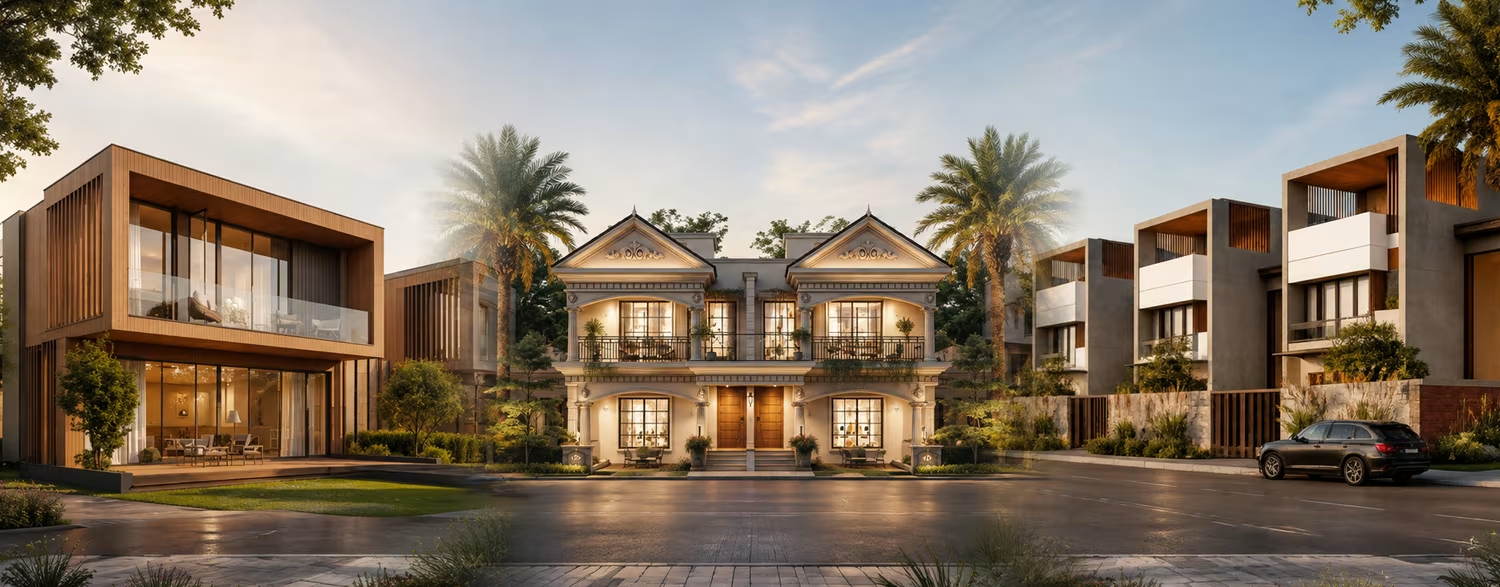
Smart City
The Union Cabinet's approval of the Sarkhej-Dholera Namo Bharat corridor marks a turning point for one of India's most closely watched planned cities. This 134-km broad gauge line, built entirely on indigenous technology, is being called India's first semi high-speed rail corridor, and it directly connects Ahmedabad's Sabarmati hub to Dholera SIR, Dholera Airport, and Lothal.
For anyone tracking Dholera Smart City connectivity, this isn't just another infrastructure announcement. It's the missing link that ties Dholera into Gujarat's broader industrial and transit network under the PM Gati Shakti National Master Plan. At an estimated outlay of ₹20,667 crore, the project isn't a token gesture, it's a serious commitment to making Dholera accessible at speed.
How fast, and what does it change?
The corridor is engineered for a maximum speed of 220 kmph, with trains expected to run commercially at 200 kmph. That kind of pace changes the practical meaning of "distance" between Ahmedabad and Dholera. Commutes and logistics runs that once felt like a day trip start looking like a same-day round trip instead. Thirteen stations are planned along the route, spreading access points across the corridor rather than funnelling everyone through one or two hubs.
This Dholera semi high-speed rail link spans roughly 108 km within Gujarat and is expected to be completed within four years. There's also a future extension planned toward Bhavnagar, which would push Dholera's rail reach even further south.
Why this matters beyond the tracks
The government has been clear that the line isn't just for passengers. It's designed to carry freight too, which matters enormously for a region positioning itself around manufacturing and industry, including the 91,000 crore rupees Tata semiconductor plant already anchoring Dholera's industrial identity. Faster, more reliable freight movement means shorter turnaround times for goods heading to ports and industrial clusters across the Delhi-Mumbai Industrial Corridor.
For the Dholera SIR rail link specifically, the timing lines up with a broader pattern, the ABCD zone's ongoing development, the 8-lane Ahmedabad expressway already in progress, and now this corridor. Each piece adds to a connectivity picture that's steadily filling in, rather than staying on paper.
What this signals for the region
Large infrastructure projects like the Sarkhej-Dholera Namo Bharat corridor tend to reshape how a region is perceived long before the first train runs. Approval alone changes the conversation, from "is this happening" to "when." For Dholera, a planned city built around industrial ambition, that shift in perception is arguably as significant as the rail line itself.
Construction will take time, and four years is a real timeline, not a marketing figure. But the direction is now locked in at the Cabinet level, with a defined budget, route, and speed target. That's a meaningfully different starting point than a proposal still waiting for sign-off.
Related articles
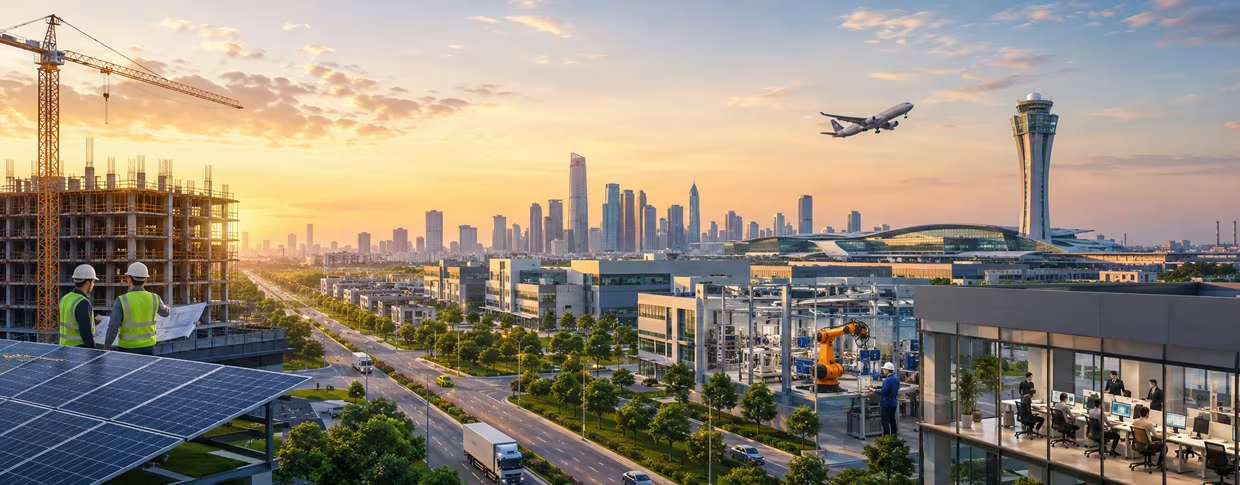
Dholera Airport Status: What the Latest Update Actually Means
Read More →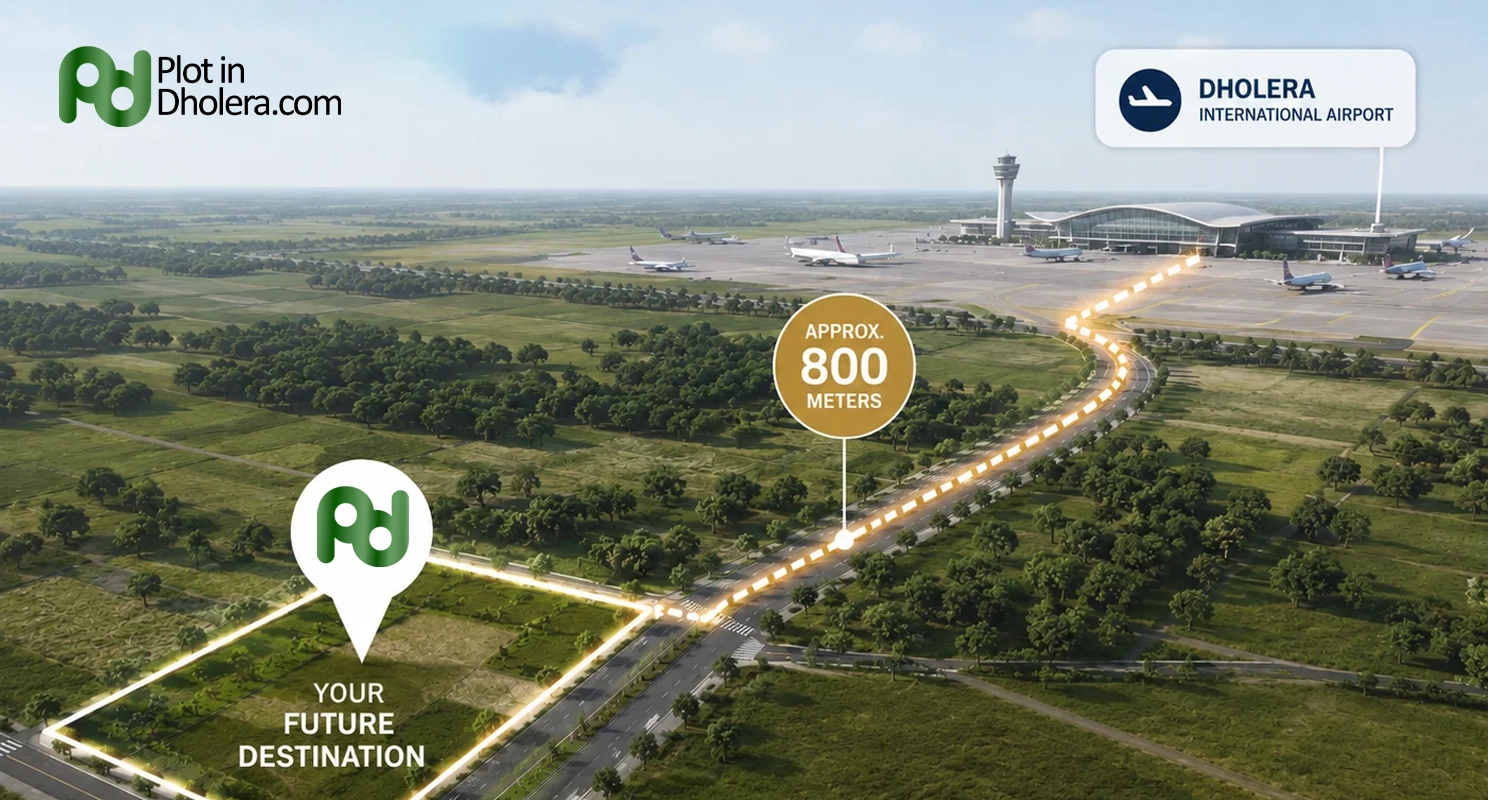
Plots Near Dholera Airport: Why Location Matters More Than Price
Read More →Ready to Invest in Your Future?
The city is being built either way. The only thing left to decide is whether your Dholera investment happens alongside it, or after everyone else's already has.
Connect with our specialists for a free consultation.
2500+Investors
50+Projects
4.9 ★Rating